
Yael Kochman
September 1, 2026
“Retail is not dead. Only boring retail is”.
This sentence was said by Steve Dennis in 2018, right in the midst of headlines announcing stores closures every other day and analysts’ predictions about the “death of retail”.
But Steve was right.
Despite those predictions about the decline of brick and mortar retail, physical stores remain central to the shopping journey. What has changed is how they operate.
Retailers are investing less in novelty and more in technologies that improve efficiency, increase visibility, and help stores perform more intelligently. As omnichannel operations become more complex and labor costs continue to rise, operational technology has become a competitive advantage.
This shift is reflected throughout Israel’s Retail Digitalization & Store Operations ecosystem. Representing approximately 15% of Israel’s retail tech landscape, the category includes companies developing solutions for in store analytics, computer vision, sensor technologies, shopper intelligence, and operational automation. Although physical retail innovation slowed globally following the 2021 funding peak, the companies that remained are increasingly focused on measurable business outcomes and operational performance.
This category is explored in detail throughout our 2025 Israeli Retail & Commerce Tech Report, alongside seven additional retail technology sectors, ecosystem trends, funding analysis, and the Top 100 Israeli Retail Tech Startups.
Download the full report to explore all retail tech categories, ecosystem trends, funding insights, and the Top 100 Israeli Retail Tech Startups.
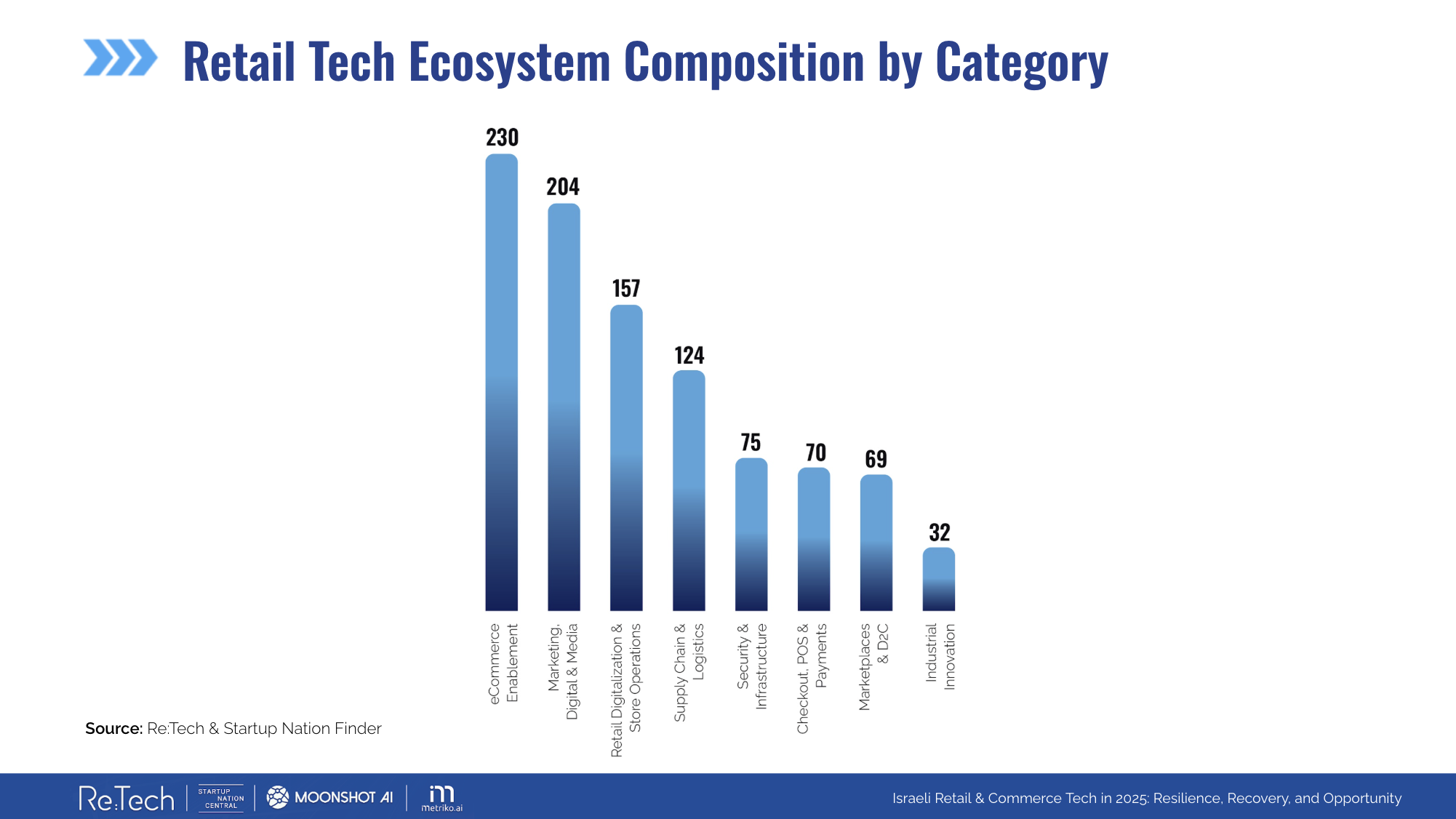
Retail Digitalization & Store Operations covers technologies that improve how physical stores operate every day, including:
These technologies help retailers operate physical stores more efficiently while connecting in store data with broader commerce systems.
This reflects a broader shift taking place across global retail. Instead of investing primarily in customer facing novelty, retailers are increasingly prioritizing technologies that improve labor productivity, inventory accuracy, operational visibility, and store performance.
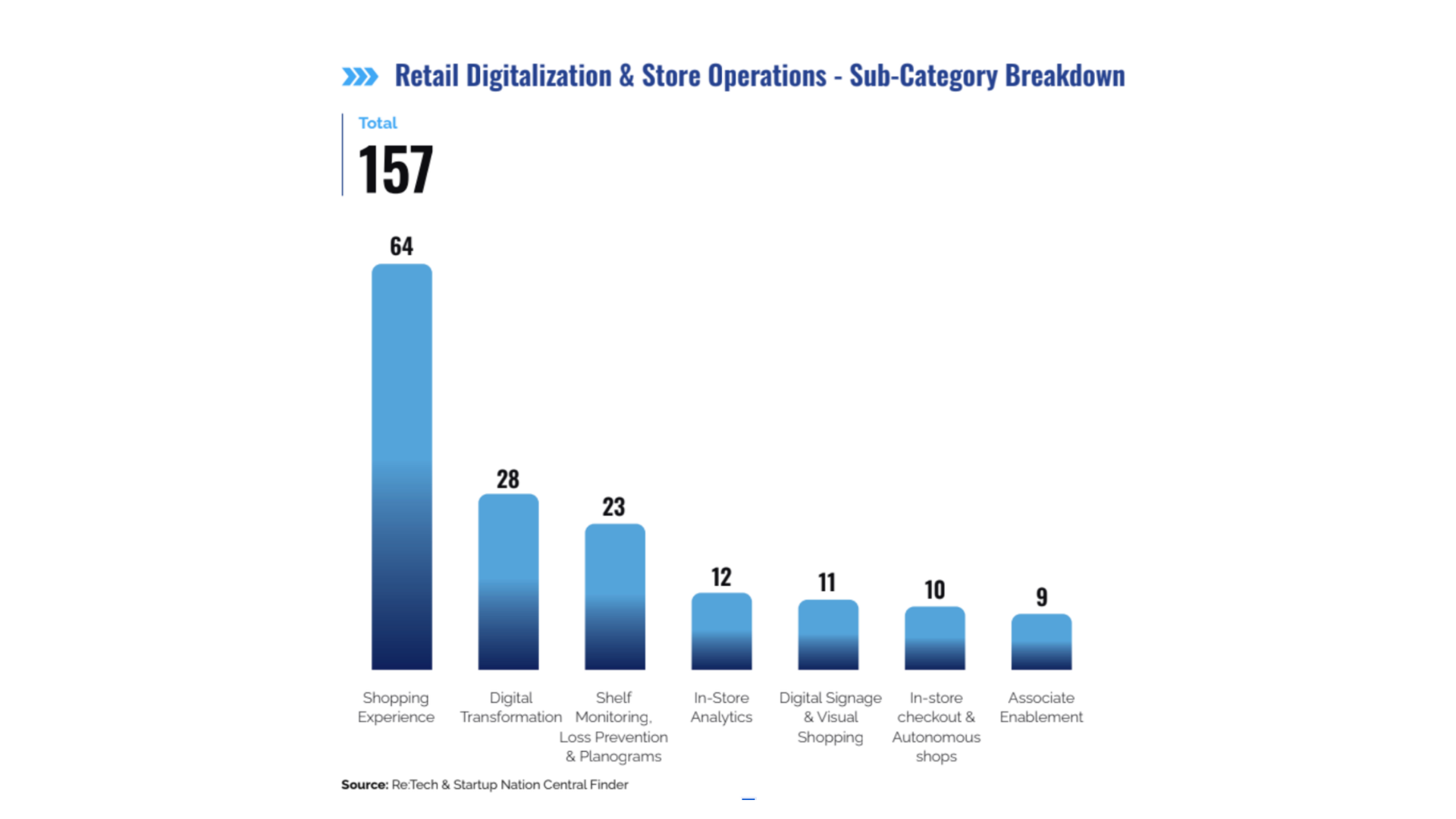
Although physical retail innovation experienced a slowdown following the funding peak of 2021, this category has remained resilient. Companies delivering measurable operational improvements have continued attracting investor interest, while funding has shifted away from more experimental in store concepts. This transition has created a healthier ecosystem centered around technologies capable of delivering clear commercial value.
Funding activity reflects this trend. One of the category’s largest recent investments was Vayyar which raised $25 million, continuing to expand its AI powered 4D imaging and sensor technology across retail, logistics, healthcare, and smart environments.
Rather than chasing consumer trends, companies in this category are solving operational challenges that retailers face every day.
Inventory management illustrates why retailers are increasingly investing in operational intelligence. As Ariel Hubara, Founder & CEO of AlgoRetail, explains: “Poor inventory management costs retailers twice: lost sales from out of stocks and shrinkage from excess stock. AlgoRetail addresses this by predicting inventory needs, automating replenishment, and building dynamic planograms to improve on shelf availability and store performance.”
.
What defines this category today is its ability to generate actionable operational intelligence. Israeli startups are helping retailers:
As AI, computer vision, and sensor technologies continue to mature, physical stores are becoming increasingly data driven environments where decisions can be made faster and with greater accuracy.
This shift is already happening inside leading retailers. As Ohad Elzur, Store & Promotion Technology Director at AS Watson, explains: “Many retailers are still working to balance digital in store experiences with measurable operational efficiency. The focus has shifted toward solutions that deliver clear operational value. Our connected store vision brings POS, shelf labels, and screens into one ecosystem that improves the shopper journey while enabling near real time, data driven store operations.”
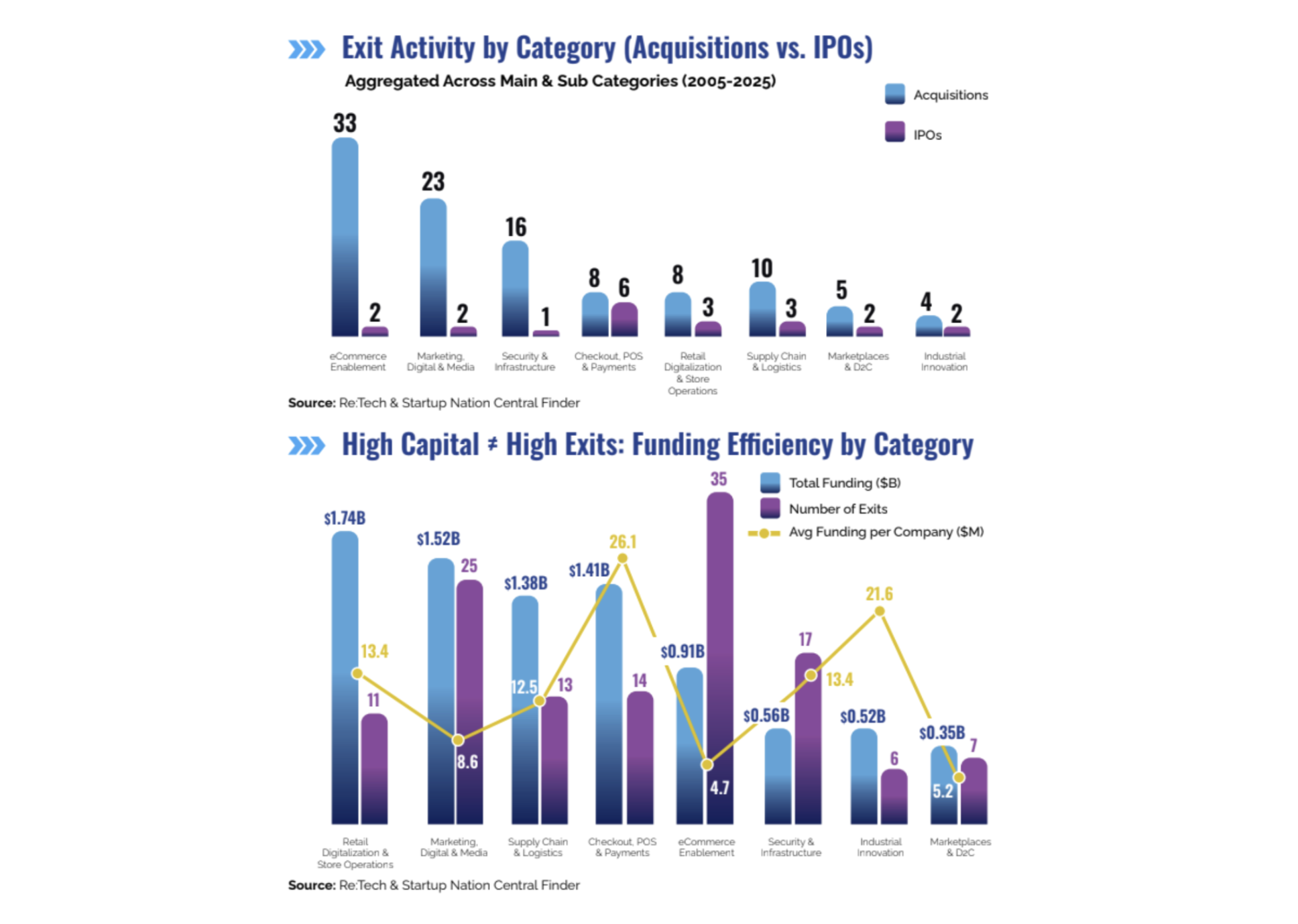
Although Retail Digitalization has produced fewer exits than software heavy categories, reflecting its greater reliance on hardware and longer commercialization cycles, strategic acquisitions continue to demonstrate strong demand for technologies that improve store operations and customer experiences.
One notable example is Memomi Labs, which was acquired by Walmart, bringing virtual fitting and digital try on capabilities further into the retailer’s omnichannel strategy. Transactions like this highlight how retailers are investing in technologies that strengthen both operational performance and the in store customer journey.
More broadly, physical stores are becoming increasingly connected environments where AI, automation, and real time data play a growing role in everyday operations. Israeli startups are helping retailers improve visibility, reduce operational friction, optimize inventory, and make faster, more informed decisions across their store networks. As retailers continue modernizing physical locations, Retail Digitalization has become one of the foundational layers of modern commerce infrastructure.
This growing strategic importance is also reflected in our the Top 100 Israel Retail Tech Startups, where several companies from the Retail Digitalization & Store Operations category were recognized for their innovation and commercial impact.
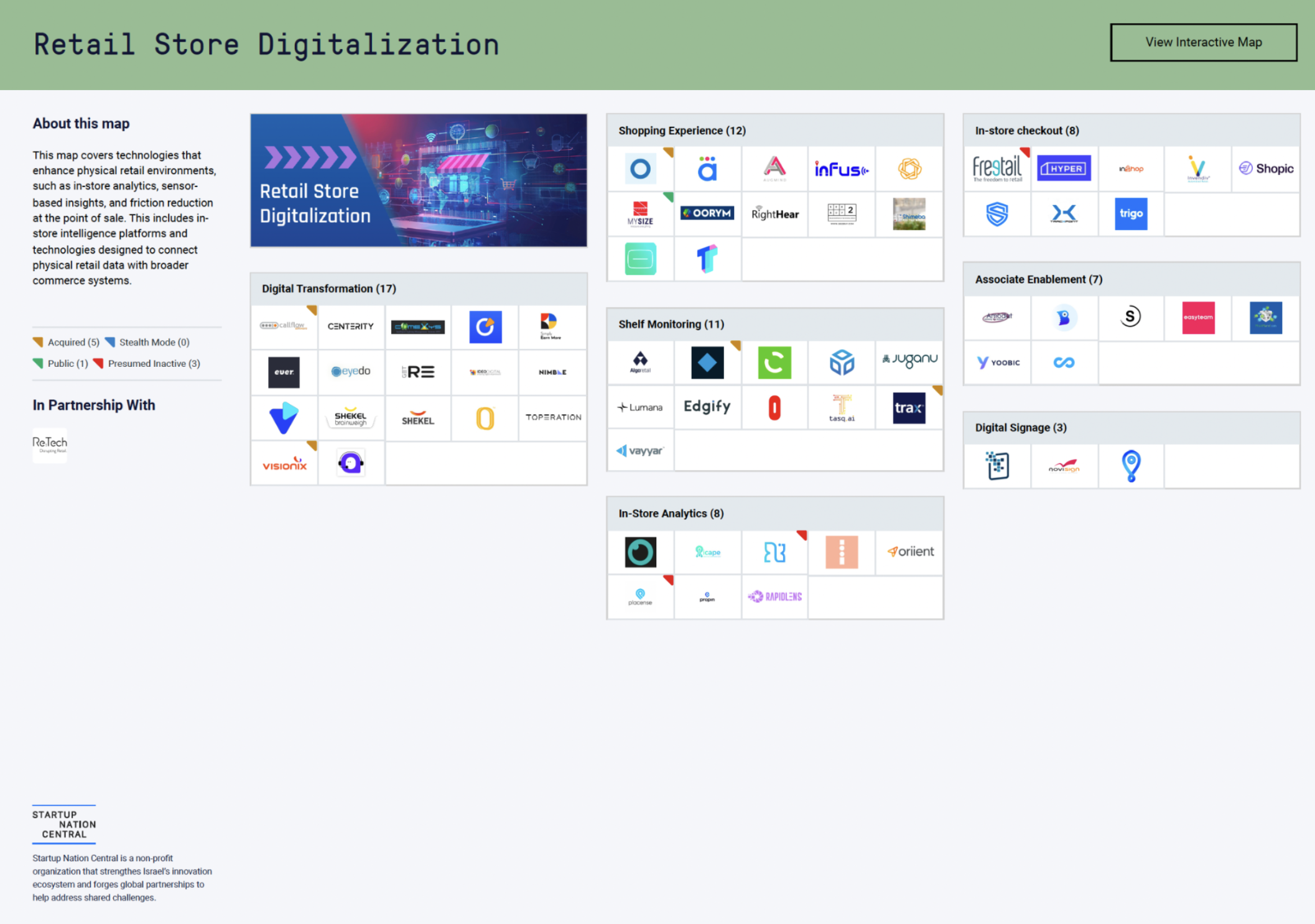
Retail Digitalization & Store Operations has become one of the ecosystem’s most operationally important and commercially relevant categories. The companies leading this space are helping retailers improve visibility, automate operations, and make better decisions across physical locations.
For retailers looking to modernize stores without sacrificing efficiency, this category represents one of the strongest opportunities emerging from Israel’s retail tech ecosystem.
Download the full report to explore the full ecosystem analysis, funding data, Top 100 tech, and additional retail tech categories.