


Yael Kochman
May 19, 2026
Ecommerce enablement has become one of the defining strengths of Israel’s retail tech ecosystem.
As global retailers rethink operations, margins, and customer acquisition strategies, demand is shifting toward technologies that improve how commerce actually functions. Israeli startups are increasingly building in these areas, helping retailers optimize pricing, operations, returns, merchandising, personalization, and cross-border commerce at scale.This trend is reflected throughout the 2025 Israeli Retail & Commerce Tech Report, where ecommerce enablement emerged as the single largest retail tech category in the ecosystem.
The numbers tell the story:
Download the full report to explore all retail tech categories, funding trends, and the Top 100 Israeli Retail Tech Startups.
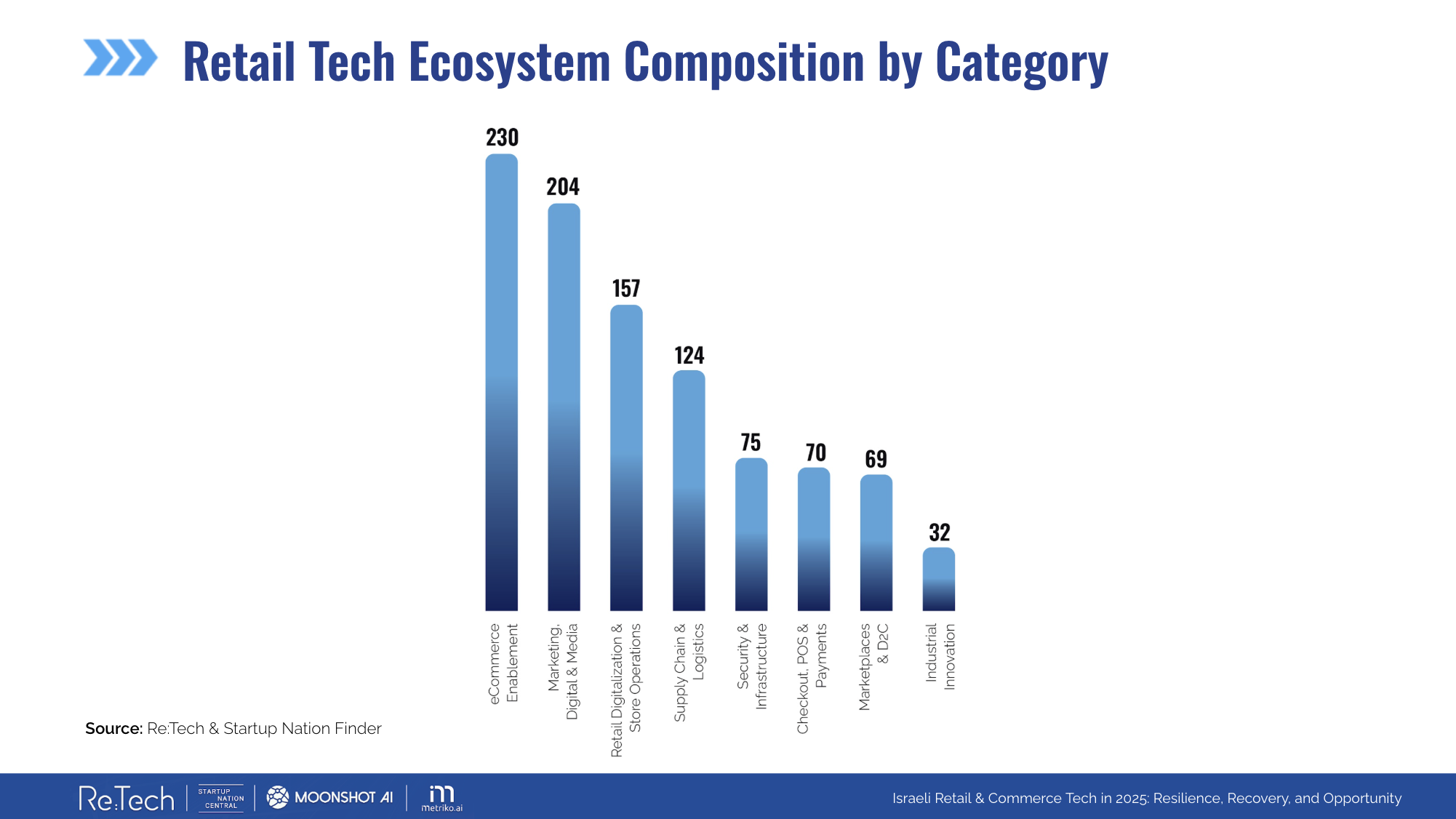
Ecommerce enablement remained one of the most resilient segments during the broader market slowdown.
While global retail technology funding contracted between 2022 and 2024, many companies in this category maintained operational momentum and continued scaling internationally. One reason is simple: these technologies sit directly inside the day to day workflows of modern retail.
The category spans:
As retailers became more selective with technology investments, startups solving measurable operational problems gained traction faster than experimental platforms. This broader ecosystem shift was highlighted by Thomas Sabu, Sr. Director of Digital Engineering at BJ’s Wholesale Club, who noted: “The retail technology ecosystem is heavily concentrated in eCommerce enablement and marketing solutions, reflecting a strong industry bias toward customer-facing capabilities. The rapid evolution of AI creates an inflection point for startups to innovate with greater efficiency, speed, and time-to-market.
One of the clearest themes emerging from the category in 2025 is the rise of applied AI.
Unlike broader consumer AI trends, Israeli ecommerce startups are focusing on targeted retail use cases tied directly to revenue, conversion, and operational performance. Areas seeing the strongest momentum include:
This application focused approach is part of what makes the ecosystem stand out globally. As Gil Globus, CEO of SayWhatt explained: “For solutions to be effective they must be customized for specific use cases. The Israeli ecosystem excels at maximizing AI for targeted applications.”. SayWhatt was also featured as one of the Top 100 startups, and belonged to this sector.
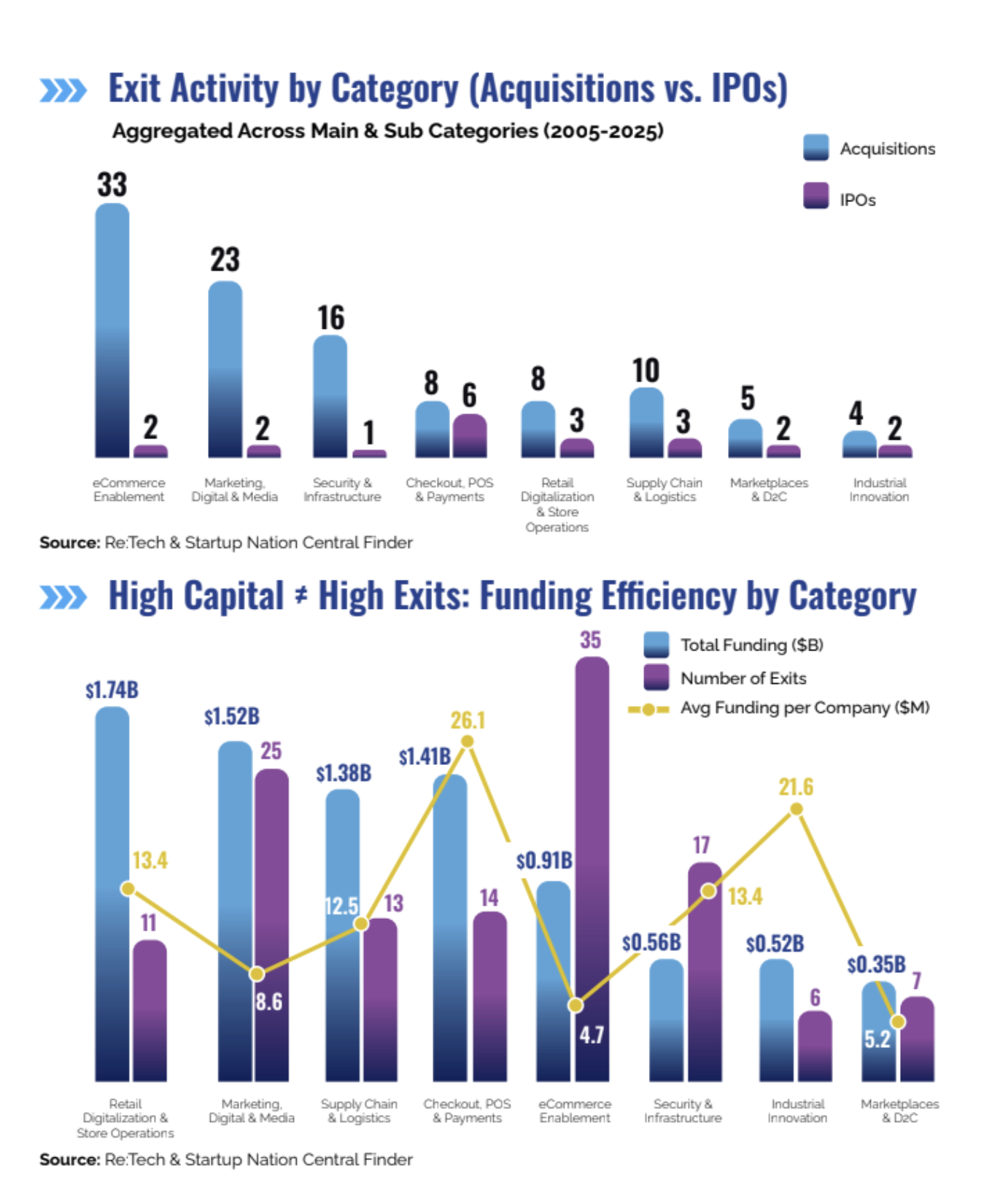
Ecommerce enablement also stands out for its capital efficiency. Compared to other retail tech categories, companies in this space have scaled meaningful operations without requiring the same level of capital intensity seen in infrastructure heavy sectors.
At the same time, investor confidence is returning strongly. Notable recent funding rounds include:
The category has also produced some of the ecosystem’s most notable exits:
These outcomes reinforce a broader pattern across Israeli retail tech: companies that solve operational commerce challenges continue attracting both strategic buyers and investor interest.
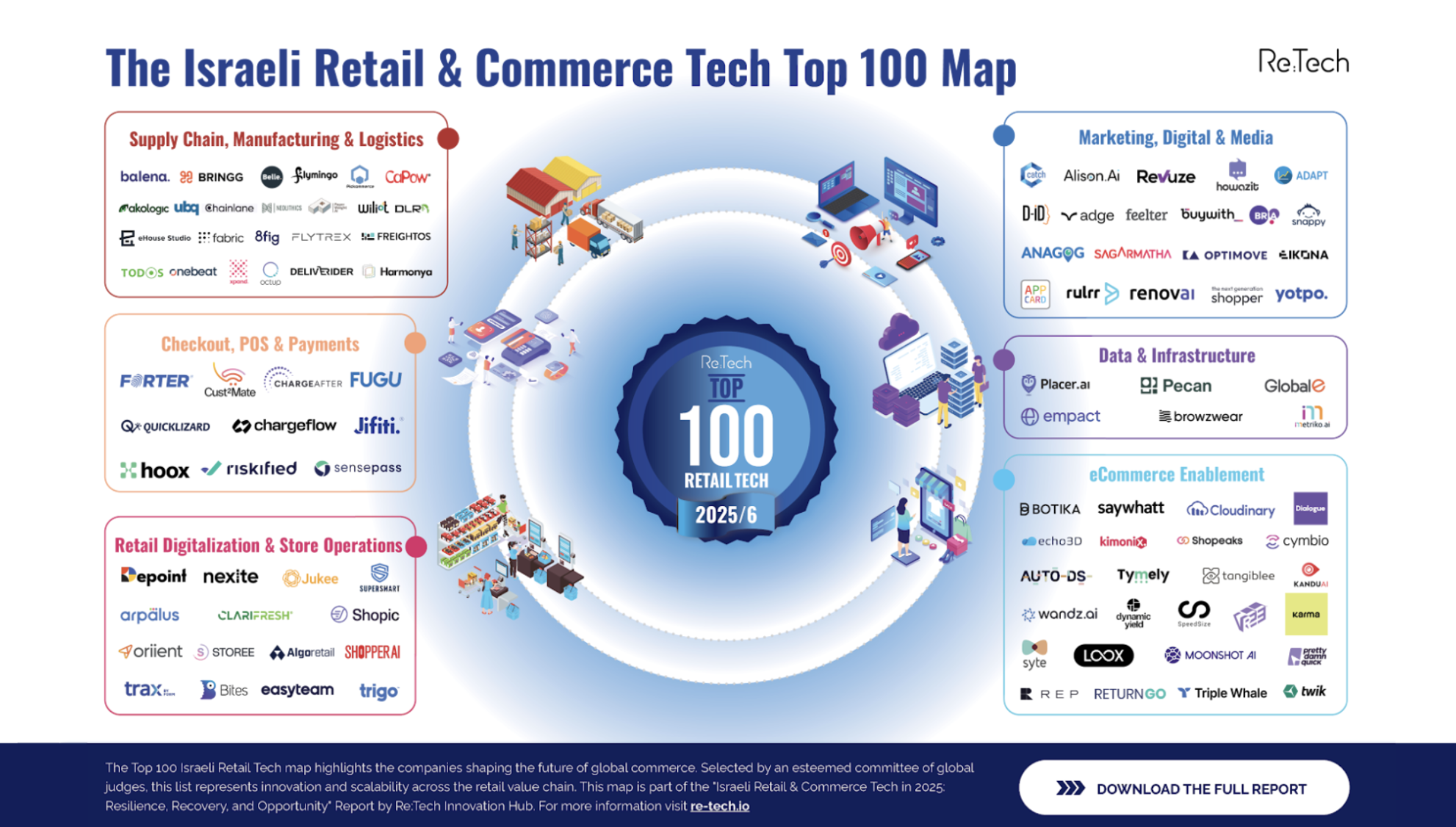
The strength of the category is also reflected in the number of ecommerce enablement companies featured in the Top 100 Israeli Retail Tech Startups.
Highlighted companies are included in our complete report coverage on the Top 100 Startups.
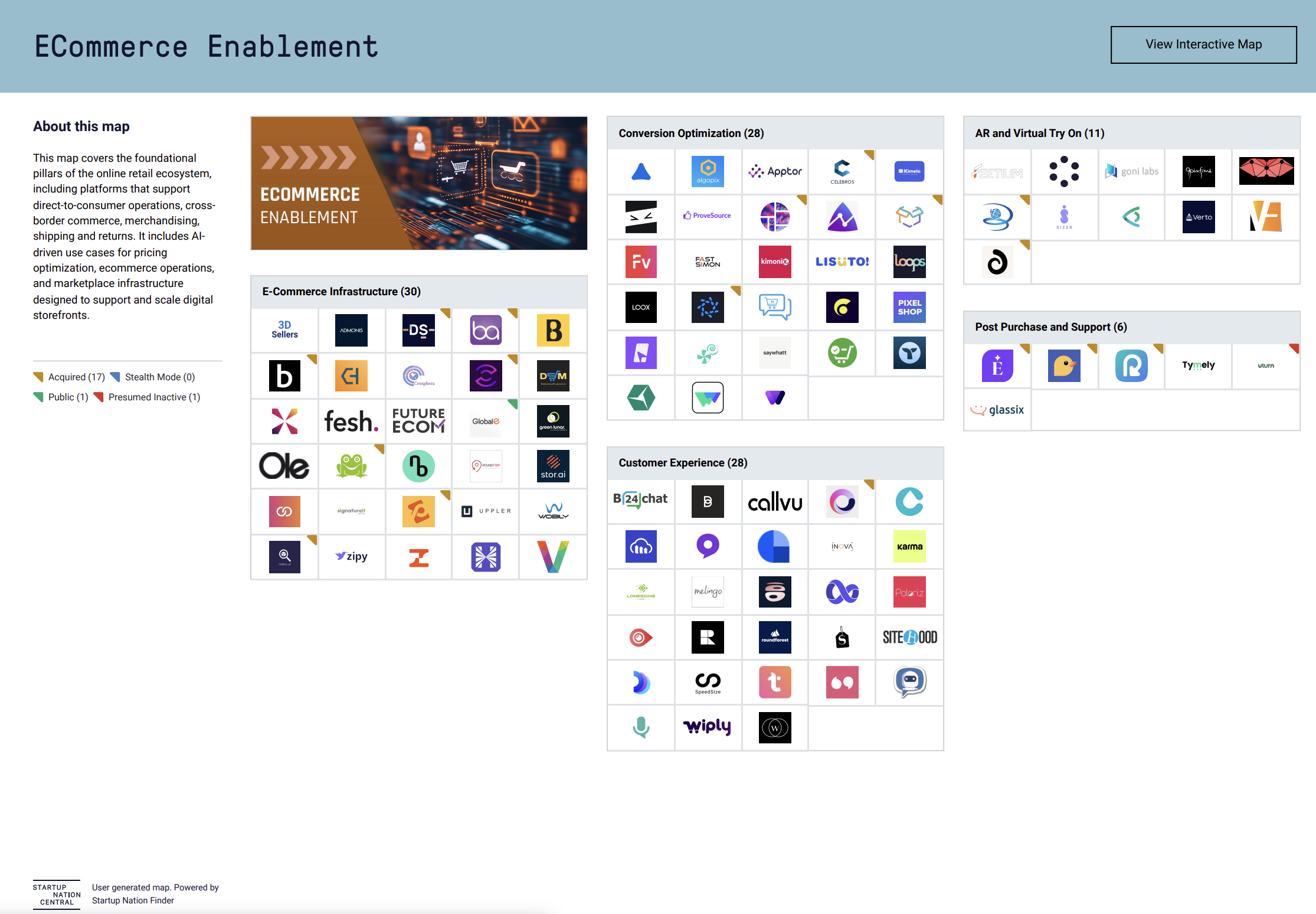
Ecommerce enablement has evolved into one of the most important operational layers in modern retail. What makes the Israeli ecosystem particularly strong is the combination of technical depth, global orientation, and strong alignment with real retail needs. Companies in this category are increasingly becoming embedded inside the infrastructure of global commerce itself.
As retailers continue prioritizing efficiency, automation, personalization, and operational performance, ecommerce enablement is positioned to remain one of the fastest moving areas of retail technology innovation.
Download the full report to explore the full ecosystem analysis, funding data, Top 100 startups, and additional retail tech categories.


Recent Comments