


Yael Kochman
November 17, 2025
If there was one thread connecting every conversation at the AiR Virtual Summit 2025, it was that retail’s future isn’t about replacing humans with AI. It’s about unlocking what humans can do with AI.
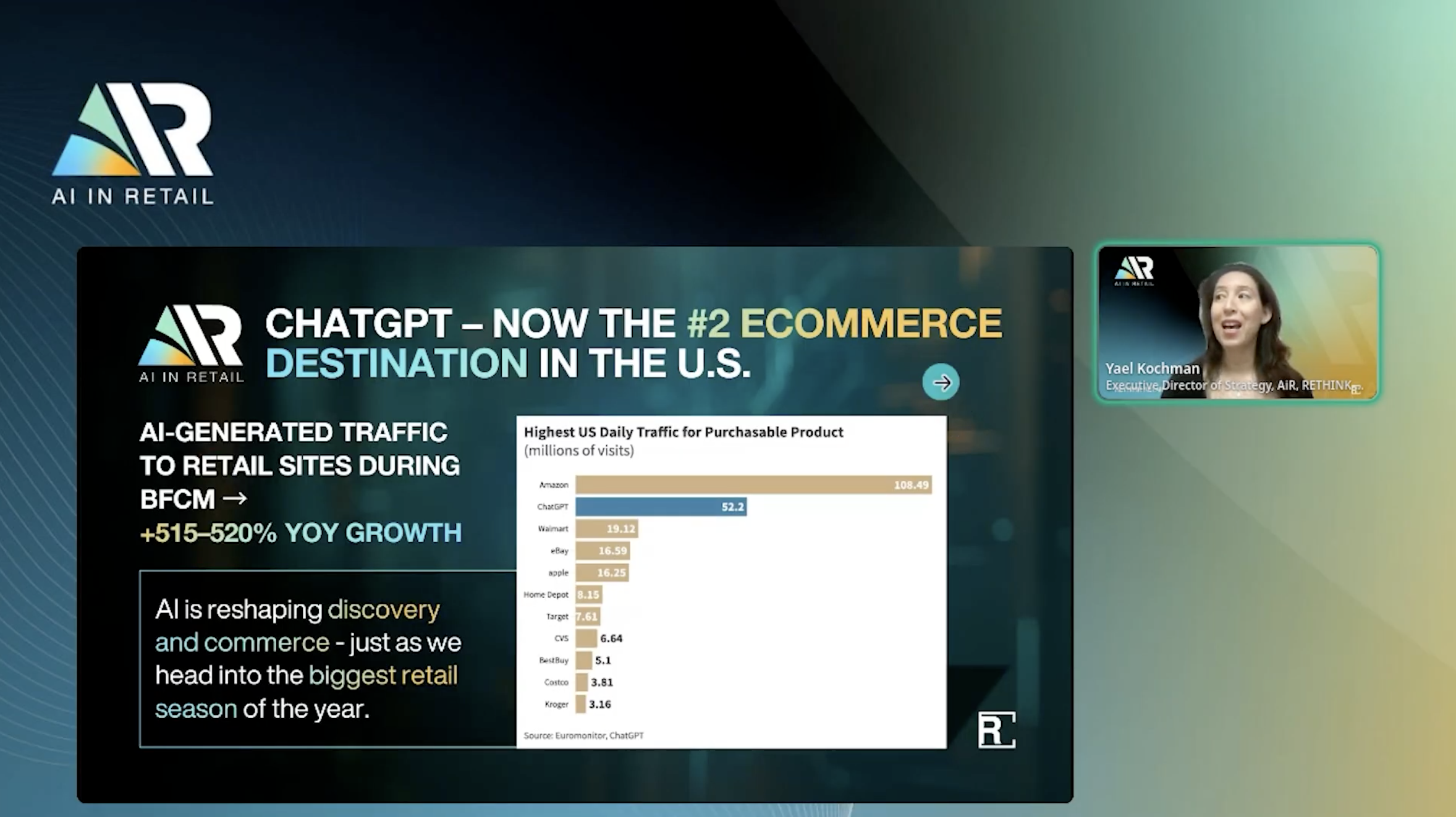
In 2025 alone, ChatGPT (a clear pioneer of AI in terms of usage) was the second highest ecommerce destination in the US, and AI platforms generated up to 520% YOY growth to retail sites, particularly during the holiday season and Black Friday / Cyber Monday, which we recently highlighted too. Across panels, keynotes, and fireside chats of AiR 2025, one insight was undeniable: the brands that will lead retail’s next era are those that marry data with empathy, automation with creativity, and intelligence with intuition.
Hosted by Rethink Retail, the AiR Virtual Summit brought together retail and technology leaders from Tesco, ServiceNow, PwC, The Vitamin Shoppe, Canadian Tire Corporation, YOOBIC, American Eagle, McDonald’s, Diebold Nixdorf, dunnhumby, Fabletics, and the National Retail Federation (NRF). Together, they explored a central question: How do brands use AI to scale intelligence, creativity, and connection, without losing the human touch?
Here are our five key insights that defined the summit. Missed the event? You can download and watch the full AiR Virtual Summit 2025 recap here!
Across the board, the speakers painted a picture of AI as a collaborative partner, one that scales human creativity and judgment, not substitutes it. So the future of retail AI isn’t about automation, but rather about amplification. AI succeeds when it scales what people do best, rather than replacing them.
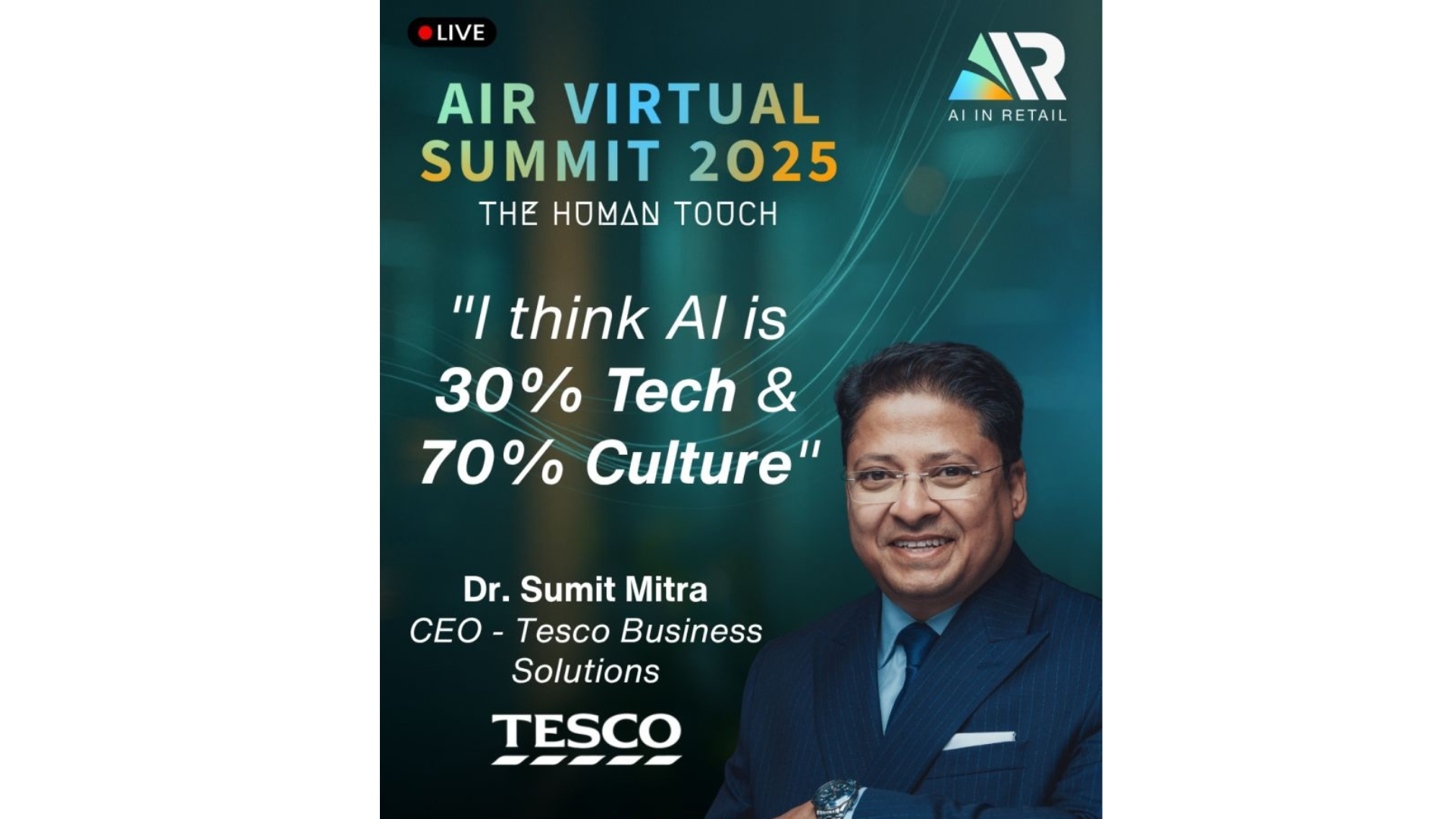
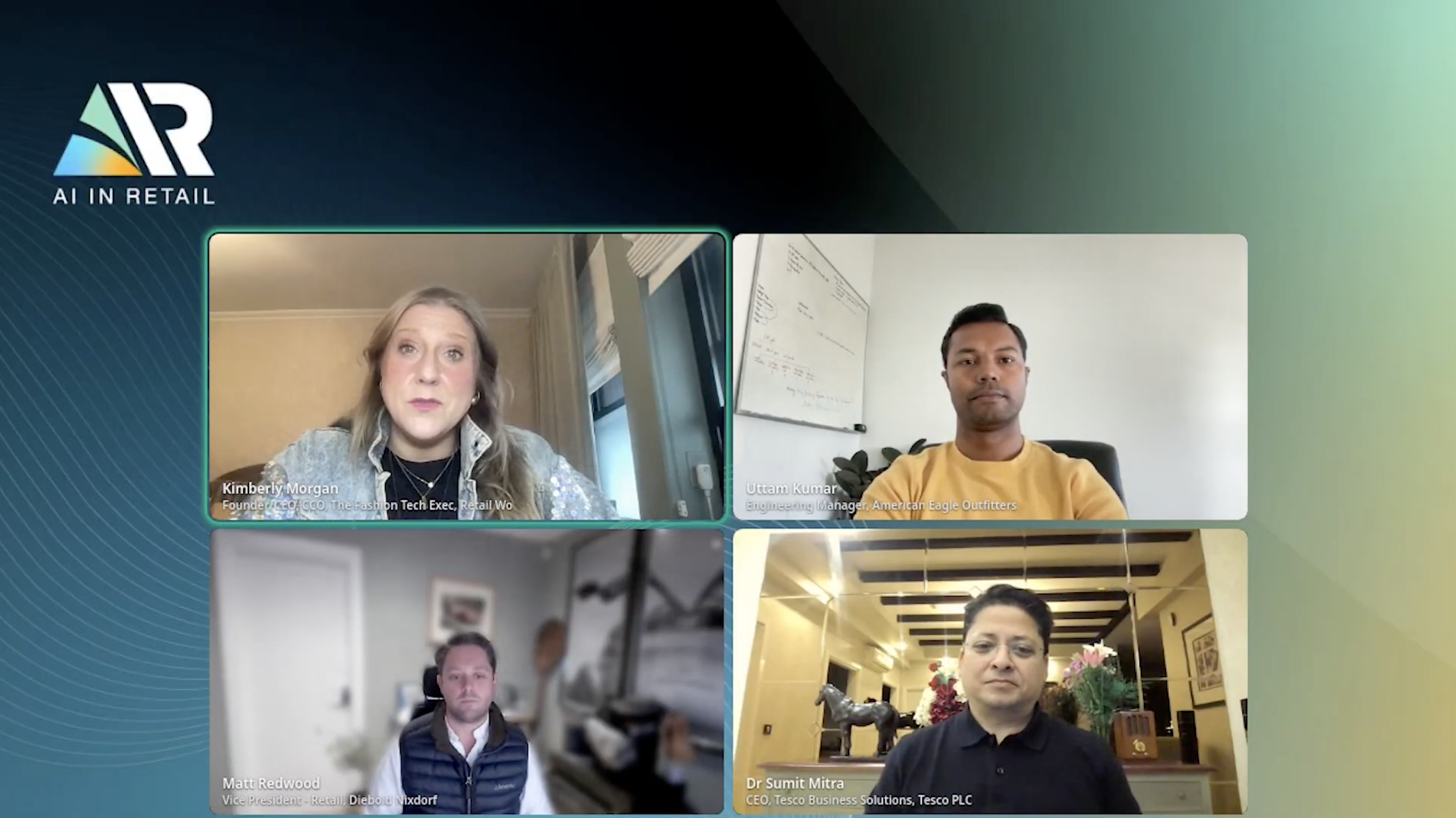
The first panel, “Smarter Together: AI and People Shaping Retail Experiences,” underscored that AI is not a replacement for human expertise but a multiplier of it. Dr. Sumit Mitra, CEO of Tesco Business Solutions, set the tone early: “AI is an accelerant, not an autopilot. AI is 30% tech and 70% culture.” He expanded that building AI-ready cultures means shifting from adoption to curiosity, rewarding experimentation, and creating what he calls “change magnetism”, where people are pulled into innovation rather than pushed.
Uttam Kumar of American Eagle described AI’s role in supporting engineering teams, predicting outcomes, automating the repetitive, and giving employees time back to innovate. Matt Redwood, VP of Retail Technology at Diebold Nixdorf, added that the brands seeing real ROI are those rethinking roles and workflows around AI tools, while Kimberly Morgan, Founder of The Fashion Tech Exec and Retail Women in Tech, reminded attendees that empathy remains the ultimate differentiator: “Technology is powerful, but empathy is irreplaceable.”
If AI is retail’s new engine, readiness is the fuel. But not just any readiness. Success depends on whether teams are prepared to work with AI, not just whether tools are deployed.
Across panels and keynotes, speakers emphasized that true transformation requires cultural alignment, leadership buy-in, and empowered employees who understand AI’s purpose in their day-to-day work. If AI is retail’s new engine, readiness is the fuel. So success hereafter really does depend on whether retailers can turn pilot projects into enterprise-scale adoption, something we have discussed before.
In her keynote, Lorraine Bacon, AMS Head of Retail & Hospitality Solution Consulting at ServiceNow, presented findings from the 2025 Enterprise AI Maturity Index, and the results were sobering. She noted that even as enthusiasm around AI surged, many organizations were losing momentum in execution. While nearly 70% of retailers have launched AI pilots, only a quarter have moved beyond experimentation into operationalized use. “Even though AI is everywhere, everyone’s investing in it, we found retailers actually declined 10.5% YOY in AI maturity. Only 29% of retailers believe they have the right talent to support AI transformation,” Bacon said. Her message was clear that success depends on more than pilots; it requires people and process readiness. “Without the right data foundations and governance, AI projects stall before they scale,” Bacon pointed out.
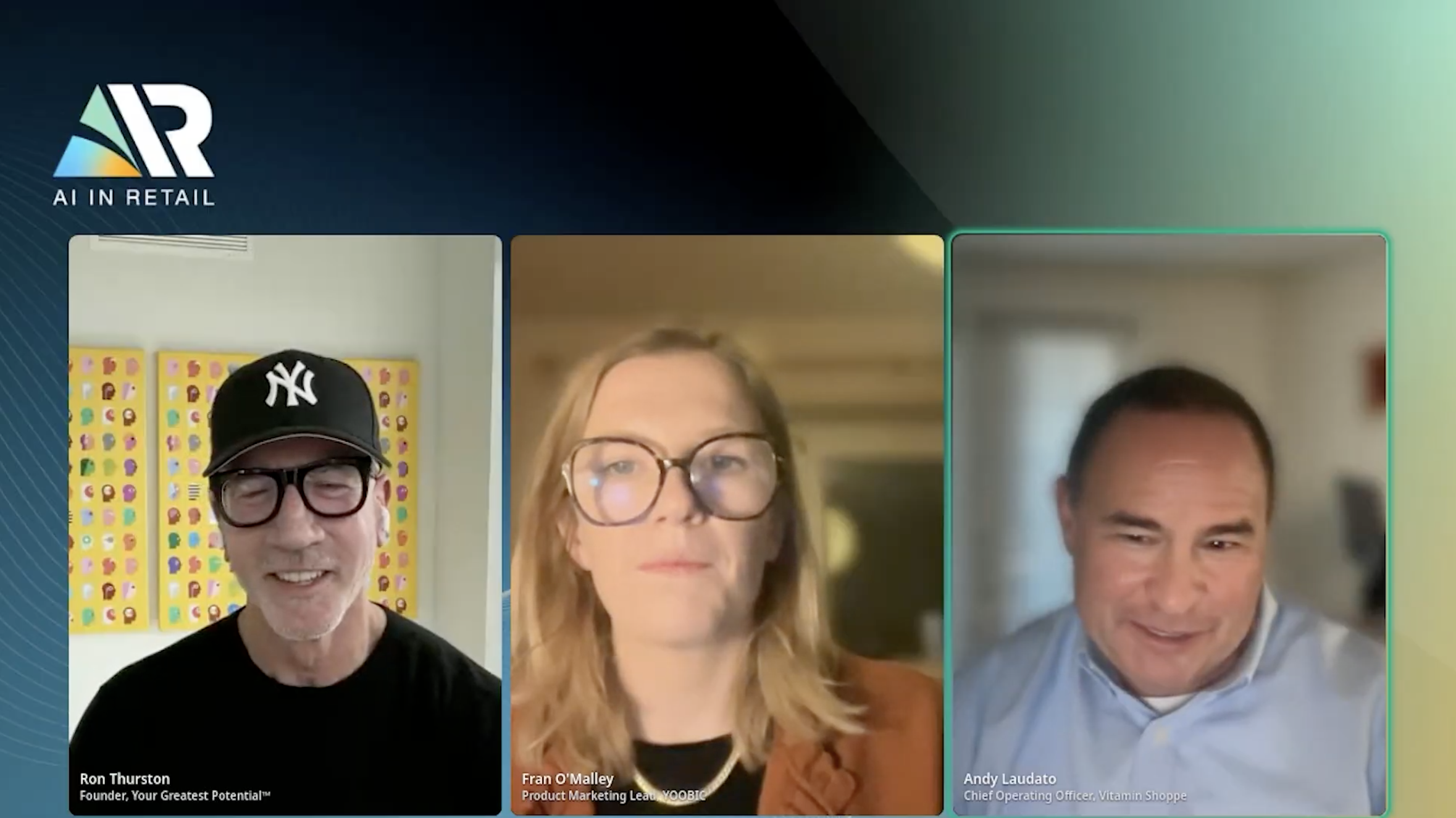
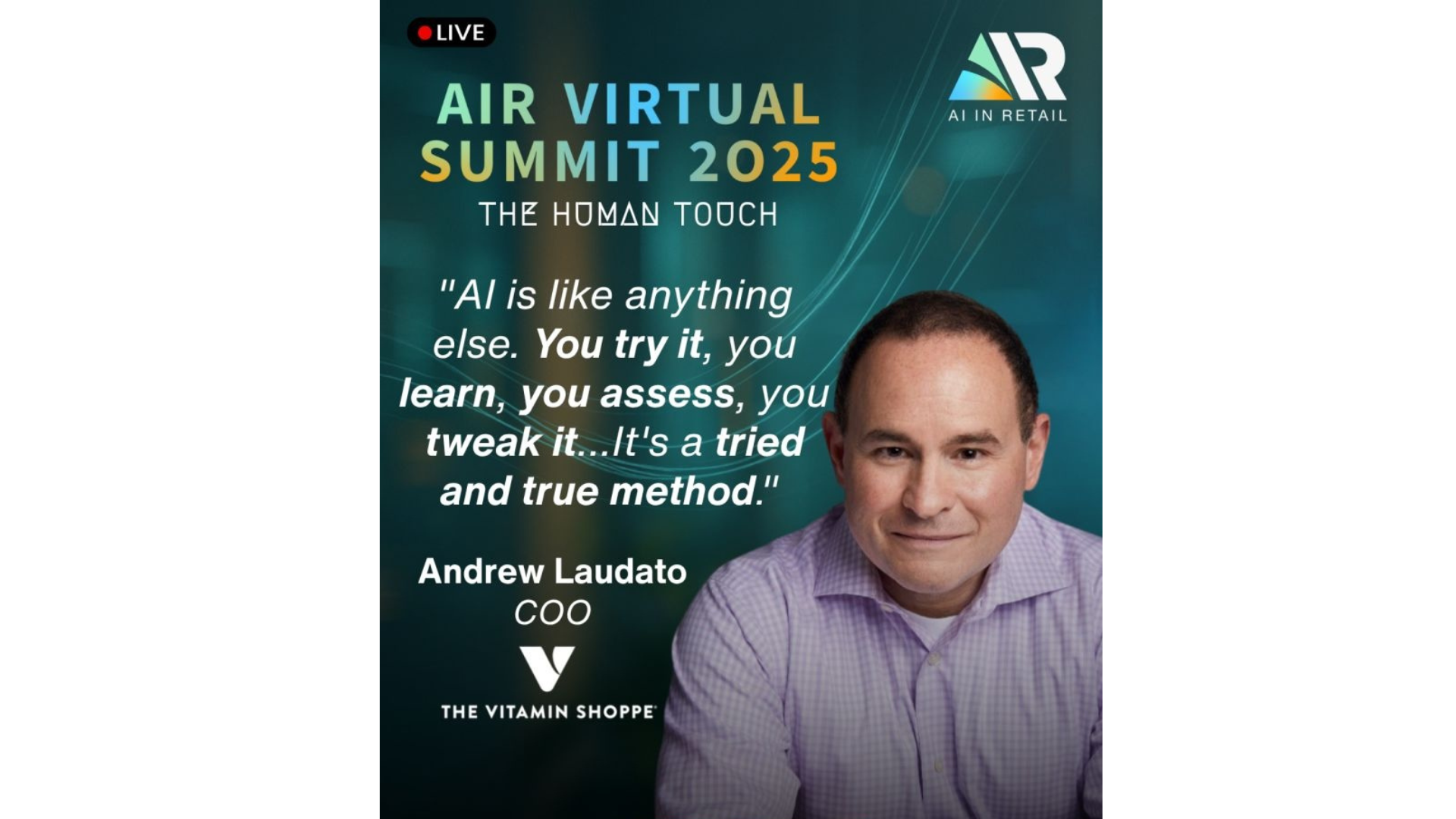
This sentiment was echoed in the second panel, “Building the Right AI Roadmap: Empowering Retail Teams to Lead Innovation.” Andy Laudato, COO of The Vitamin Shoppe, emphasized that process discipline underpins successful AI. “You can’t bolt AI onto a messy process,” he said. “You have to rebuild the process so people and systems move together.” He also shared a standout example: The Vitamin Shoppe deployed an AI-based gamified education tool that personalizes training for every employee. “Each person gets their own individual content,” he noted, with the system adapting to what each associate knows, doesn’t know, and is struggling with. It’s a model for how AI can upskill at scale.
Fran O’Malley of YOOBIC and Ron Thurston of Your Greatest Potential built on that idea, emphasizing that true readiness comes from empowering employees at every level to understand, trust, and co-create with AI. Thurston added that “when people understand AI’s purpose in their day-to-day work, adoption becomes natural rather than forced.”
Together, the keynote and second panel made one thing clear: readiness is no longer about having AI tools, it’s about having AI-capable teams.


As AI permeates every touchpoint in marketing, retail and operations, trust and governance have become the cornerstones of brand resilience. AI’s potential in retail is immense, but so are the expectations around how responsibly it’s deployed, which we saw at earlier conferences and events too.
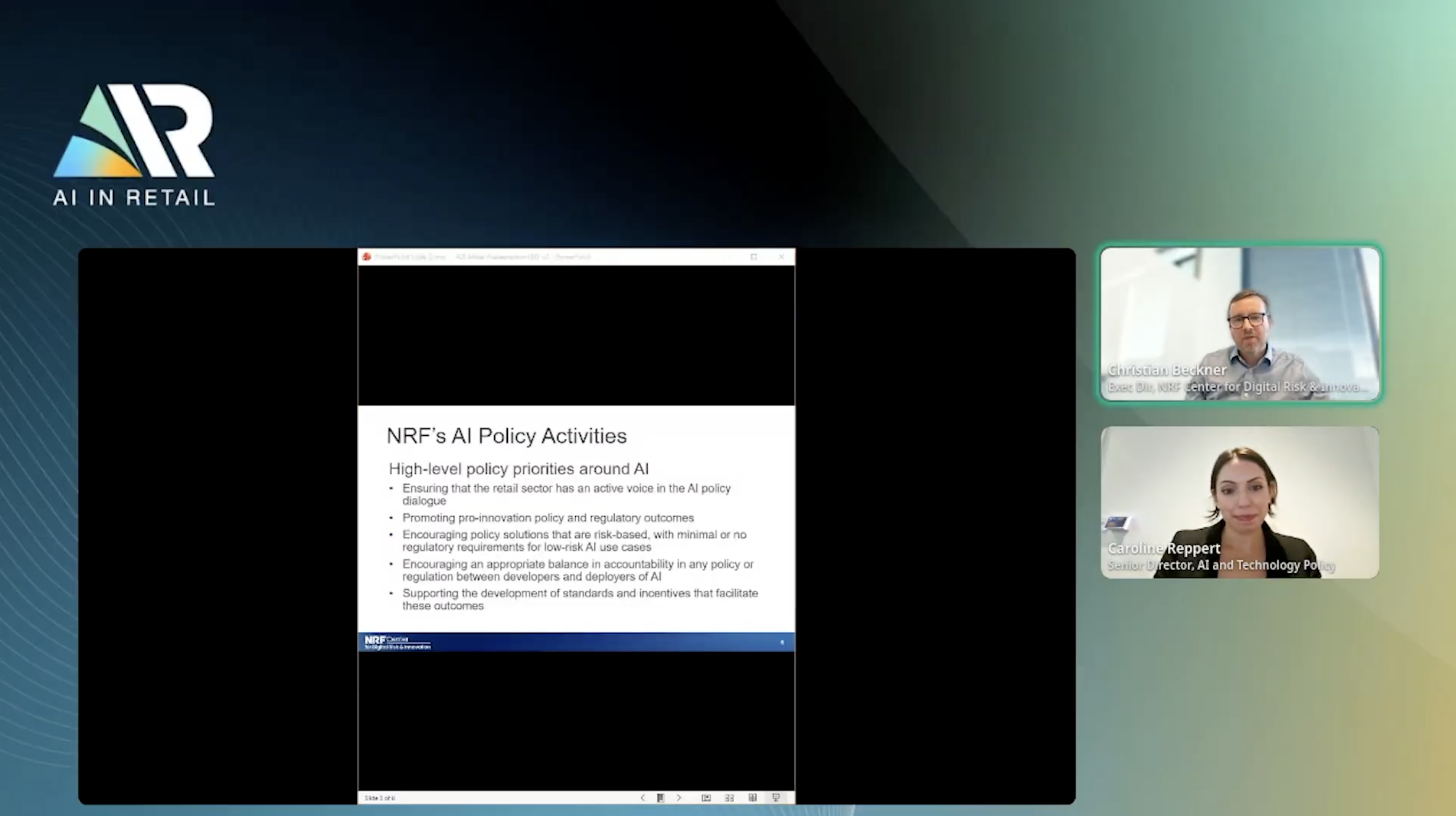
In her keynote, Caroline Reppert, Director of AI and Technology Policy, NRF, discussed how the industry is navigating the evolving policy landscape. “Retailers are shaping how AI is adopted responsibly, and that starts with internal accountability,” she said. Christian Beckner, Executive Director of the NRF Center for Digital Risk & Innovation, emphasized collaboration between retailers and policymakers to balance innovation with consumer protection. This is important as it covers all the behind the scenes on AI governance that is handled by the likes of the Office of Science and Technology, which has led national conversations on responsible AI, with NRF actively contributing to ensure retailers are represented. “As creativity scales, accountability must scale with it,” she concluded, reinforcing these things must evolve in parallel with AI-powered content creation.
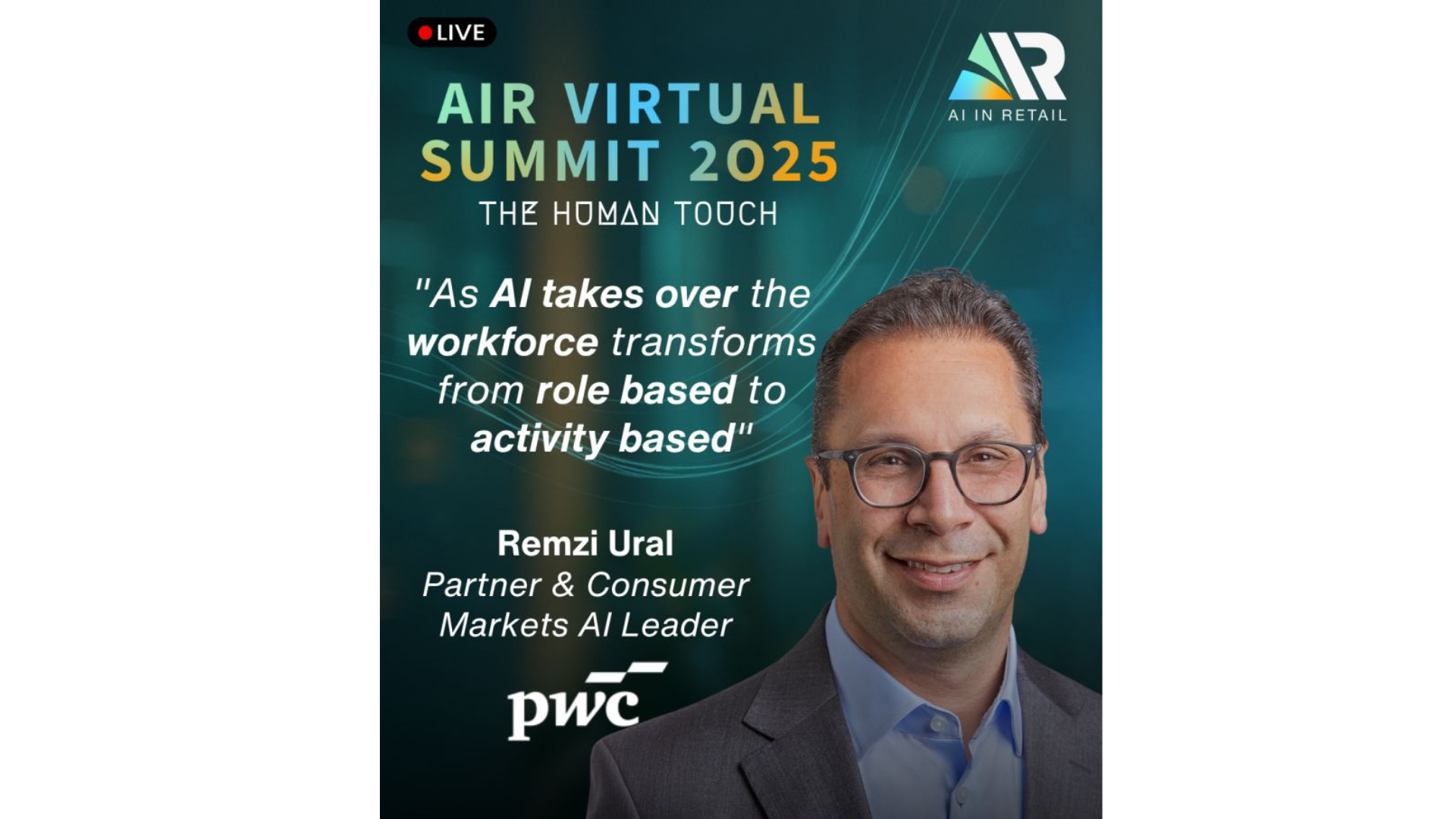
Remzi Ural of PwC reinforced this in his keynote and discussions from an enterprise perspective. “AI is taking on the repetitive, structured decisions, leaving people to focus on storytelling, strategy, and connection,” Ural said. Supported later by Christopher Hannegan and Leopoldo Aguerrevere also of PwC, they noted, “AI isn’t just changing how we work; it’s redefining what work means.” Aguerrevere emphasized that building trust, operationally and ethically, will distinguish leaders from others.
These insights reflected a unifying belief across the summit, that responsible AI isn’t a compliance checkbox, but it’s a business strategy. Trust is now as measurable as conversion.
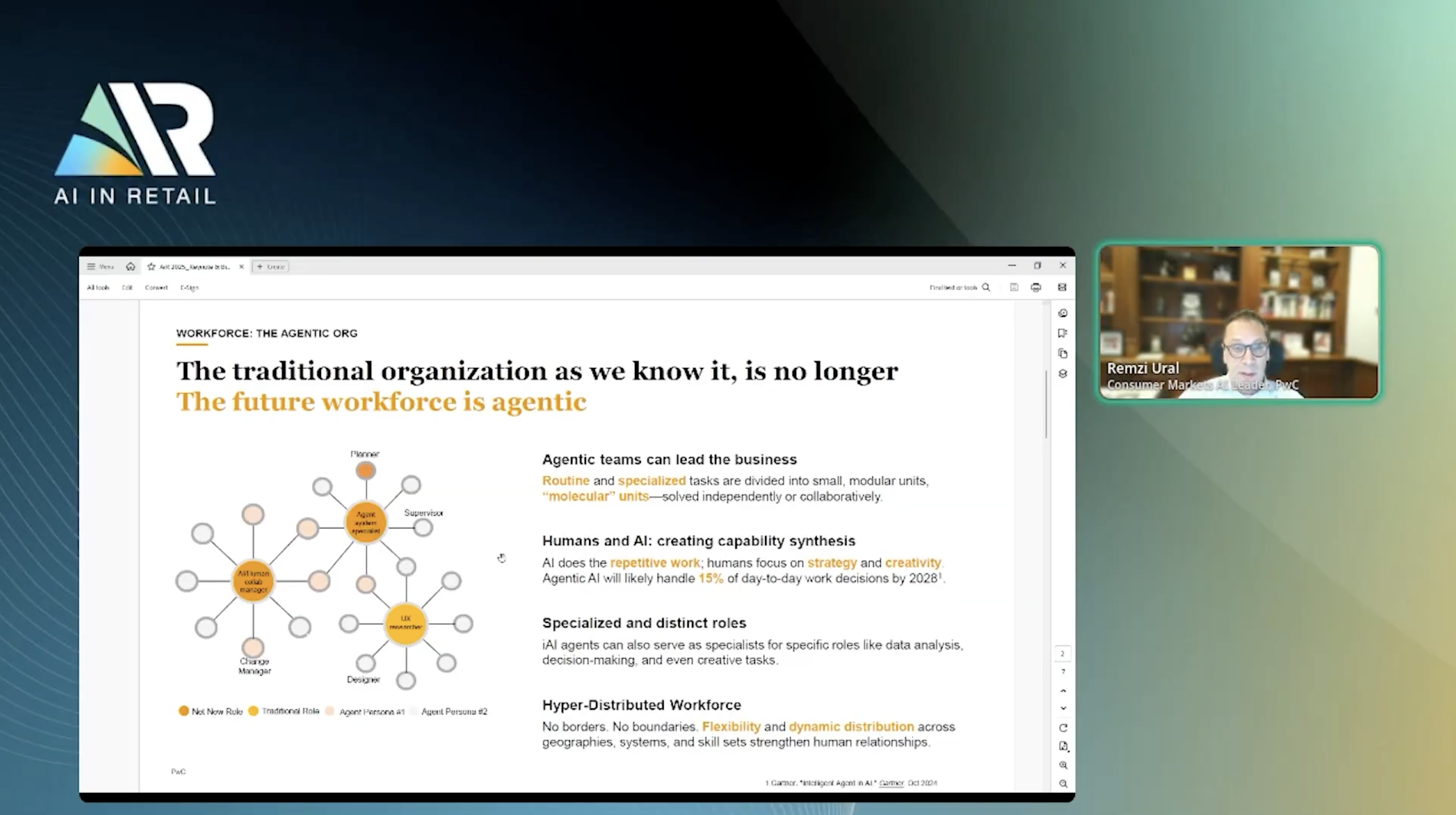
Retail’s next transformation isn’t technological, it’s structural. While people readiness is essential as we discussed the next frontier is organizational design. Beyond culture and talent, AI is fundamentally transforming how retail operates, and the next competitive edge won’t come from isolated AI use cases, but from end-to-end systems where intelligent agents make continuous decisions across the business.
Remzi Ural of PwC highlighted the shift toward ‘agentic AI’ systems, models that act autonomously within guardrails. “We’re moving into a world where AI acts as a colleague, not a tool,” Ural said. “Organizations that design structures where humans and intelligent agents collaborate seamlessly will scale fastest.” Rather than supporting only analytics teams, these systems act across marketing, supply chain, and operations, forming the “connective tissue” across previously siloed functions.
Similarly, Matt Redwood, VP of Retail Technology at Diebold Nixdorf, emphasized evolving into intelligent ecosystems where AI drives everything from inventory optimization to dynamic pricing, to personalized customer engagement, all working together to create a responsive data rich environment. And these technologies enable the AI to operate seamlessly across physical spaces to make companies and even retail stores a digitally enabled hub. “We’re moving toward environments where AI is constantly sensing and responding,” he noted, thereby creating stores that adapt in real time.
Across sessions, it became clear that AI strategy is no longer confined to data scientists, but it’s a shared language spanning marketing, product, operations, and HR. So truly, retail’s next transformation isn’t technological, but is structural, which we discussed previously.
If data fuels AI’s power, creativity gives it purpose. Retail’s most forward-thinking brands are already using GenAI to reimagine storytelling, personalization, and design.
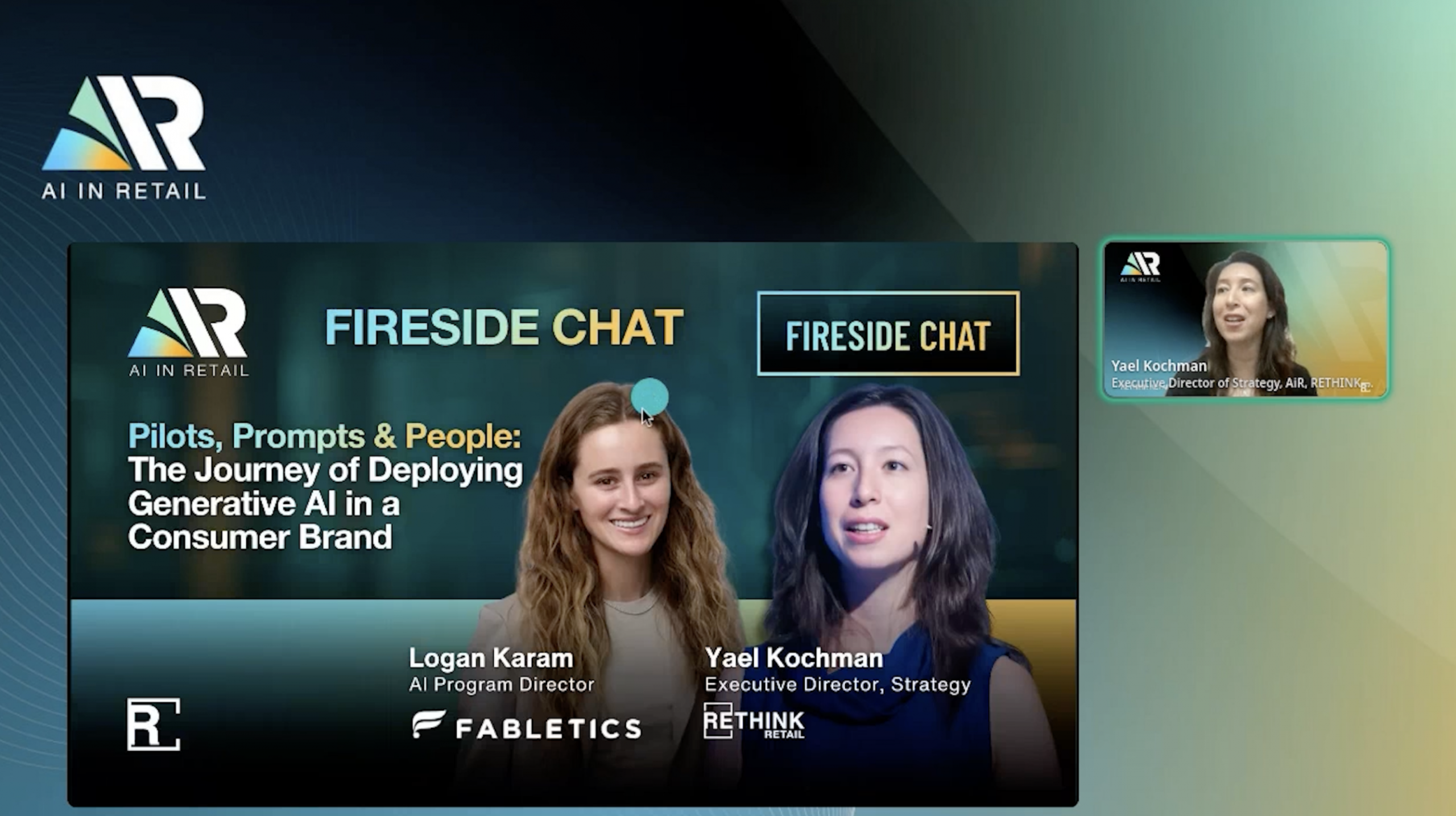
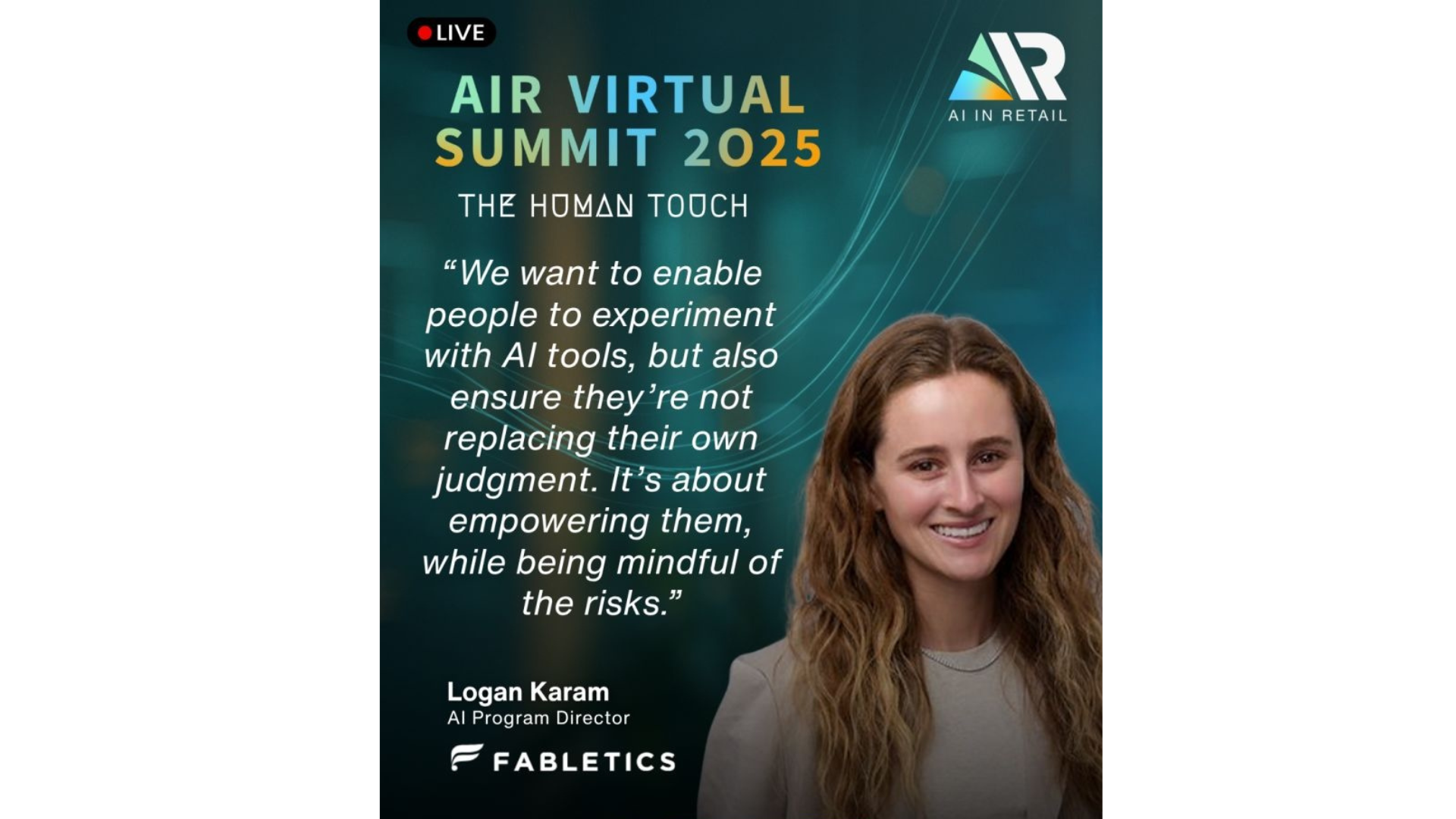
Closing out the summit, Logan Karam, AI Program Director at Fabletics, shared the retailer’s journey deploying generative AI across creative and product teams. The fireside chat, “Pilots, Prompts & People,” detailed how AI tools are helping content teams ideate faster, visualize collections, and personalize storytelling at scale. “We saw immense time savings and more efficient workflows and cross-functional collaboration,” she said. “The one skill retail professionals need most is experimental leadership, which is being comfortable to learn with your company and iterate fast.”
Karam’s reflections offered a window into the next phase of AI maturity, which is one where creative teams use generative tools to ideate faster, not just execute faster. “What surprised many attendees,” Karam added, “was how quickly creative teams adopted GenAI once they saw it wasn’t replacing vision. It was accelerating it.” She shared examples of designers generating multiple moodboards in minutes, testing colorways in seconds, and using AI to visualize fit and silhouette variation before sampling.
Yael Kochman of Rethink Retail and Re:Tech closed the summit by reflecting on AI’s cultural impact. “AI may automate tasks, but it’s people who give retail its meaning,” she said. “The future belongs to teams who can merge both.”.
The AiR Virtual Summit 2025 made one thing clear: retail’s AI evolution isn’t about replacing people, it’s about enabling them to deliver at a new scale of creativity, precision, and empathy. Every speaker echoed the same conviction: when AI becomes a co-pilot rather than a command center, retail becomes more human, not less.
In a year where algorithms dominate headlines, the summit offered a refreshing truth: the smartest stores of the future will be those that remember why we shop in the first place: connection.
Catch up on all the sessions and download the full AiR Virtual Summit 2025 recap here.
